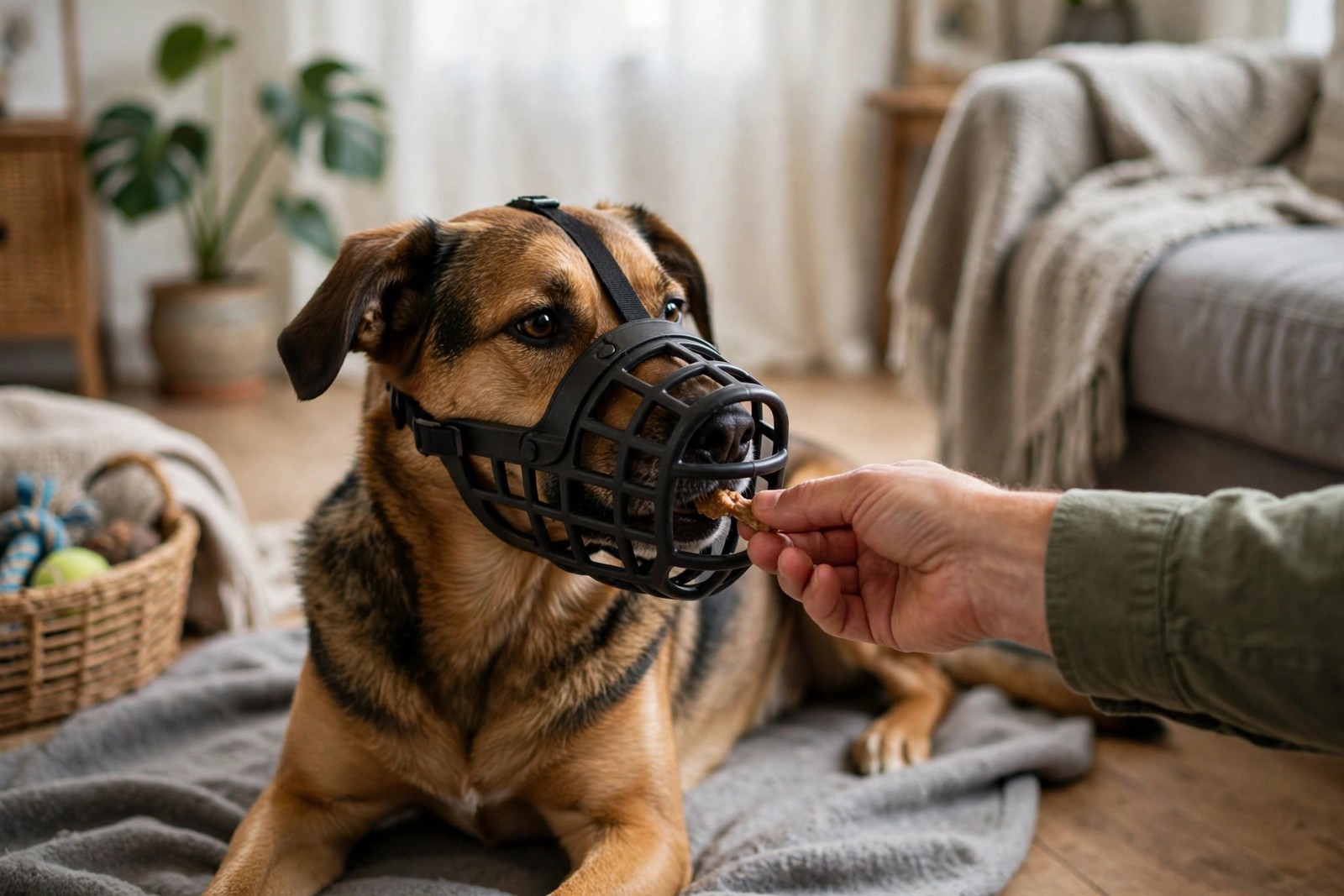
A muzzle fitted for the first time in a vet waiting room, on a frightened dog, in a hurry, teaches exactly one lesson: muzzles mean bad days. The same muzzle introduced at home, stuffed with something delicious, on an ordinary afternoon, teaches the opposite. Train it in peacetime, at your dog's pace, and the muzzle becomes a predictable piece of kit like a lead or a harness, ready for the groomer, the vet, an injury, or any day when safety needs a backup.
Choose a Basket Your Dog Can Live In
Fit matters more than speed. Choose a basket muzzle with room for a full pant, because dogs cool themselves by panting and a muzzle that clamps the mouth shut is unsafe for anything beyond a moment. Your dog should be able to drink and to take small treats through the basket, and the straps should sit clear of the eyes. Let your dog investigate the new object on the floor first, paying every sniff and nudge, so the muzzle starts life as furniture that produces food rather than as something that descends on the face. If your dog is between sizes or has a short nose, ask your vet or a qualified trainer to check the fit in person rather than guessing.
Make Nose-In a Game Your Dog Starts
Keep sessions to two minutes a day. Smear something tasty and lickable inside the basket and hold it steady while your dog pushes their own nose in to clean it out; the moment the food is gone, the muzzle comes away. Repeat until your dog dives toward the muzzle when it appears. Then stretch the picture in tiny steps: nose in for one second before the treat, then a few seconds, then nose in while you simply touch the straps without fastening anything. Your dog always chooses to enter the muzzle; you never push it on. If your dog backs away, the step was too big: return to the version that earned a happy dive, and end the session there on a win.
Add the Strap in Tiny Steps
The strap is where home training often rushes and fails, because fastening changes the feel completely. Touch the straps, then lay them over the neck unfastened, then fasten for a single second and feed through the basket before removing it. Build the fastened time across days, not within one session: a few seconds, then half a minute of pottering around the kitchen, then a few minutes with a game or a chew in the garden. Keep that daily rhythm while the stages are new; short and cheerful beats long and earnest. Pawing at the muzzle means you have asked for too long: shorten the next rep, pay faster, and let the dog succeed smaller.
Wear It for Good Things, Not Only Hard Days
A muzzle that only appears at the vet will smell of the vet within two visits. Once your dog wears it comfortably at home, take it on cheerful outings: a favourite walk, a sniffy field, a visit to a friend's garden, always with food arriving through the basket. Practise the whole real-life picture in pieces: muzzle on, a gentle hold of the collar, a mock examination of ears and paws, muzzle off, dinner. Dogs who rehearse the full sequence shrug at the real appointment, because every element is familiar and most of them predict food. Refresh the skill every few weeks with one easy session, even when no appointment is due, so the training never goes stale.
With KinsLe's Care Pass, that hard-won comfort travels with your dog: send the groomer or sitter a time-boxed Care Pass noting that your dog is muzzle-trained, which basket is theirs, and the nose-in game that puts it on happily, so nobody improvises a first fitting on a stressful day.