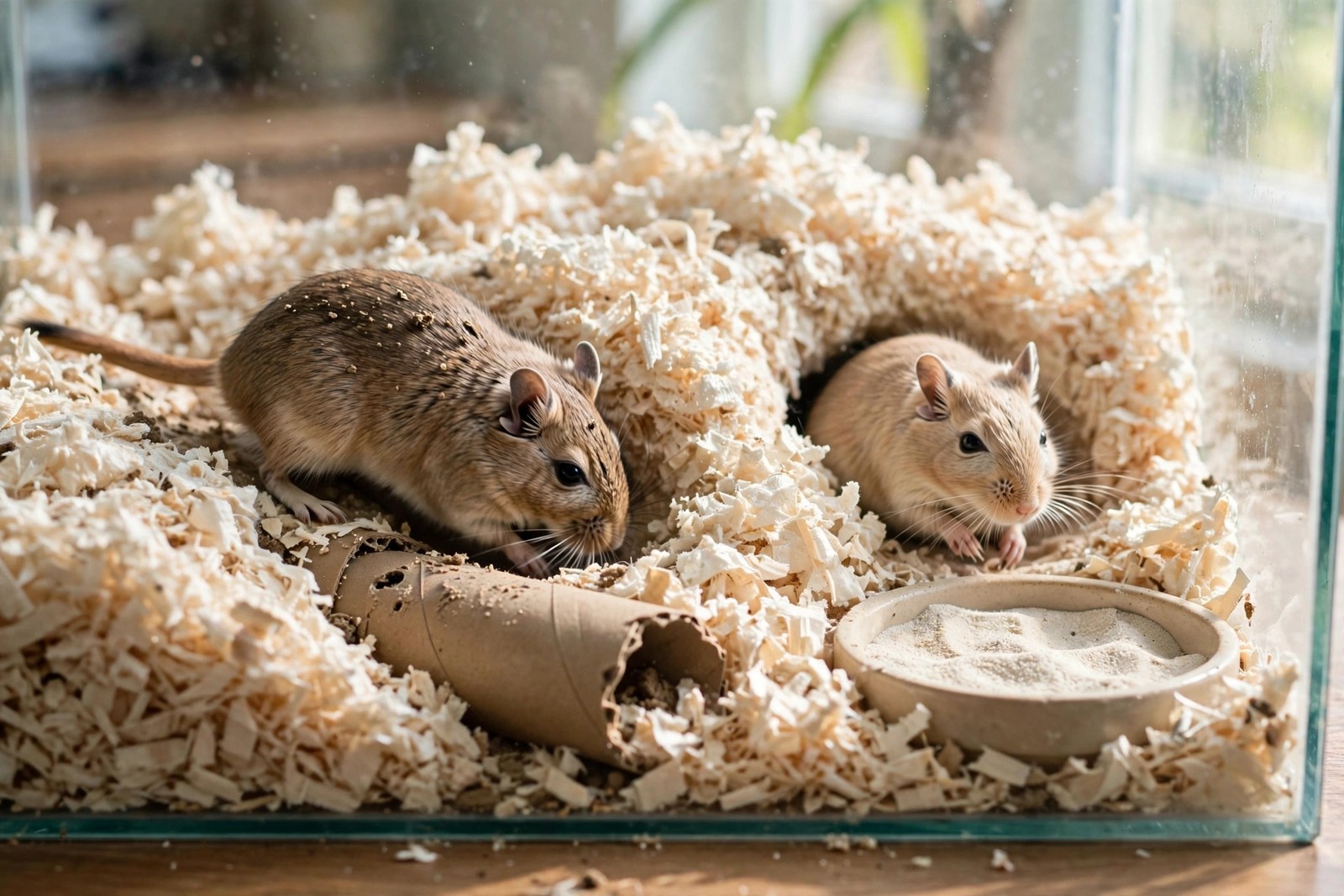
Gerbils are among the cheapest small mammals to run, and budgeting for them holds one surprise: the animal that fits in your palm gets through bedding like a much larger pet, because digging is not a hobby for a gerbil, it is the whole point. Plan on roughly thirty-five to seventy dollars a month for a pair, which is how gerbils should be kept, since they are social animals.
Bedding: The Biggest Line by Far
Gerbils need a deep layer of substrate, ideally around 25 to 30 centimetres in a tank-style home, so they can build tunnel systems. A full change therefore uses a large bag or more, typically costing about 15 to 25 dollars a month once spot-cleaning and top-ups are averaged in. The saving grace is that gerbils are desert animals: their droppings are dry, their urine is scant, and the enclosure stays clean far longer than a hamster's or rat's, so you replace sections rather than constantly starting again. Never use fluffy fibre bedding, which is unsafe if eaten and useless for holding tunnels.
Food, Sand and Things to Destroy
- Food mix: about 5 to 10 dollars. A quality gerbil mix of seeds, grains and pellets, fed at roughly a tablespoon per gerbil a day, lasts well. Scatter it through the bedding rather than filling a bowl, so they forage and dig for it.
- Bath sand: about 3 to 5 dollars. A small dish of chinchilla-style sand, offered regularly, keeps coats in condition. Use sand, never fine dust, and replace it once soiled.
- Chews and enrichment: about 3 to 8 dollars. Cardboard tubes and boxes cost nothing and are shredded happily, but wooden chews, willow and seagrass items need a small replacement budget. Their teeth grow continuously, so something safe to gnaw must always be available.
Health Fund and Everything Else
Set aside about 10 to 20 dollars a month toward vet care. Gerbils are hardy, but they are small, prey animals who hide illness, and common problems such as scent-gland tumours in males, overgrown teeth and respiratory infections need a vet rather than home guesswork. There is practically no energy cost: a normal room temperature suits them, with no heater or lamp to run. Factor in the occasional replacement water bottle and a deeper tank upgrade as youngsters grow, spread across the year.
The pattern of gerbil spending is a cheap food bill riding on an honest bedding bill, and owners who accept that from the start keep very contented diggers. Sharing access helps the budget hold, because nobody buys a second bag of bedding in ignorance, and through Family Sharing, KinsLe lets you share profile access with relatives who help look after the pair.