
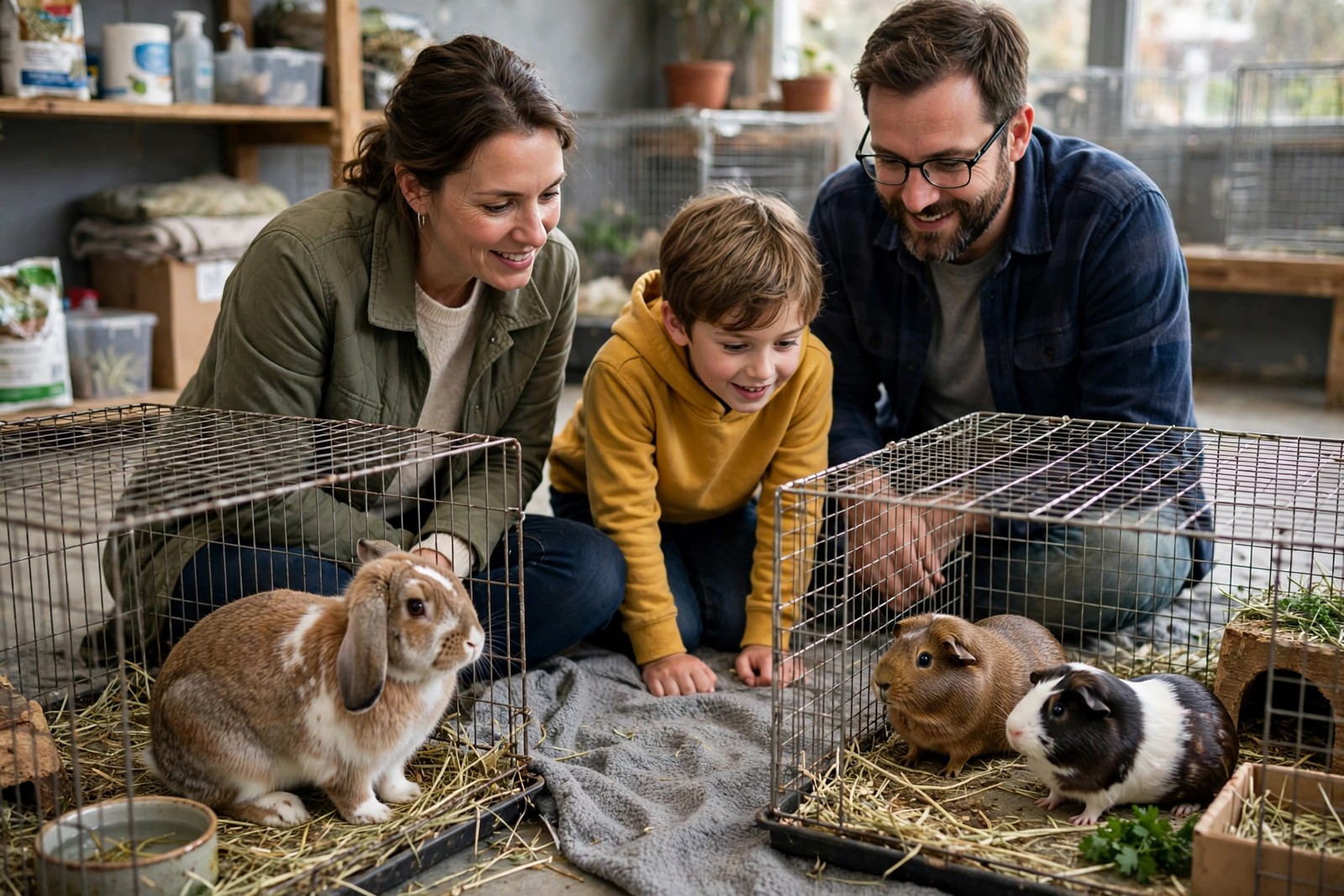
For most families, guinea pigs are the easier first pet — they are steadier on a child's lap during supervised cuddles and famously vocal — while rabbits suit families ready for a larger setup, litter training and gentler handling in exchange for a deep, dog-like bond. Neither is a low-effort "starter pet." Both live for years and need looking after every day, unlimited hay, and company of their own kind. The right choice depends less on which animal is "better" and more on your home, your children's ages, and how much floor space and time you can genuinely give.
Handling and Young Children
Guinea pigs generally tolerate sitting on a lap for short, supervised cuddles, and their wheeks, purrs, and popcorn jumps make their feelings easy for children to read. They should still be handled low to the ground with two hands, but they are less fragile than rabbits. Rabbits, by contrast, mostly prefer all four feet on the floor: being picked up triggers a prey animal's fear of being grabbed, and a kicking rabbit can injure its own spine or scratch badly. Many rabbits adore strokes and will hop up beside you on their terms — wonderful for older children and adults, frustrating for a toddler who wants to carry a pet around.
Space, Mess, and Daily Rhythm
Rabbits need a large enclosure plus hours of exercise in a rabbit-proofed room or run; they use litter trays reasonably well with training, but they chew — skirting boards, cables, and carpet edges all need protecting. Guinea pigs need a roomy single-level cage or pen (they are poor climbers and fragile if dropped), spot-cleaned daily, and they produce a surprising amount of mess for their size. Both species eat hay constantly, which means hay in the house, hay on clothes, and a standing order with your supplier. Rabbits are crepuscular — lively at dawn and dusk — while guinea pigs potter and nap around the clock in short bursts.
Lifespan, Company, and Cost
Expect roughly five to eight years for guinea pigs and eight to twelve for a well-kept rabbit, so this is a commitment stretching across a child's whole school career. Both are social animals who should live with a companion of their own species; a bonded pair is happier, healthier, and honestly more fun to watch. Budget beyond the purchase price: quality hay, fresh vegetables daily, bedding, and an exotics-savvy vet. Rabbits also need neutering for health and harmony in most cases, which adds an up-front cost worth planning for.
Questions to Ask Before You Decide
How much uninterrupted floor space can you give? Who does the daily feeding and cleaning when the novelty fades — and is an adult truly willing to own that job? Are your children ready to sit on the floor and let a pet come to them? If your heart says rabbit but your space says no, wait. If lively lap company for gentle kids sounds perfect, guinea pigs may win. Either way, visit a rescue and handle both species with your family before deciding; watching your children with real animals settles the question faster than any comparison table.
Start Organized From Day One
Whichever you choose, KinsLe makes the paperwork painless: your first pet profile is free, and every profile gets a unique QR ID that links to your pet's details — handy for sitters, vets, and peace of mind. The Lost Pet Alert System is also free in every profile and shows on the map, so a finder can message you directly if a pet ever gets loose. Verified QR ID Pet Profiles in KinsLe, set up from the first day, mean anyone who finds your pet outdoors can scan the code, learn the animal's name, and contact you without guessing who the owner is.