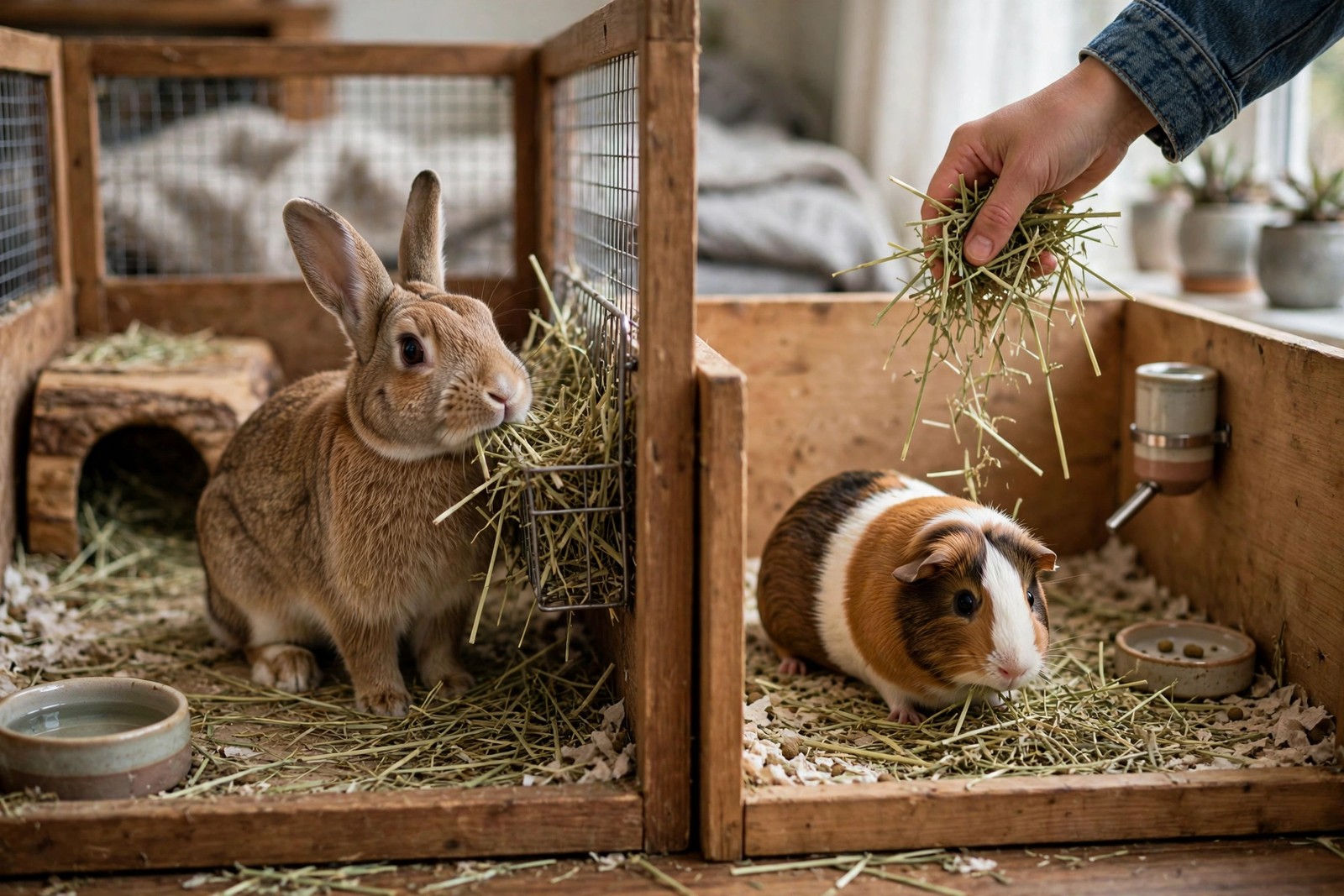
For rabbits, guinea pigs, and chinchillas, hay is the foundation of the diet and of healthy tooth wear, so an allergic keeper cannot solve the problem by serving less of it. The allergy here belongs to the person, usually triggered by hay dust, fine particles shaken loose during handling, and animal dander. That distinction shapes the whole plan: the animals keep constant access to good hay, while the household reduces how much dust reaches the allergic person's nose, skin, and sleeping space. Managed steadily, exposure can fall a great deal without the pets losing anything they need.
Lower the Dust Before It Spreads
Start with the hay itself. Dust-extracted or low-dust hay, described in those plain terms at purchase, releases fewer fine particles when a handful is pulled apart, and that helps every time the rack or pile is topped up. Handle hay in small daily portions instead of dragging a whole bale through the home. A portion shaken out away from the enclosure loses its loosest dust before it goes in, so less of that cloud forms at face height during feeding.
Where Hay Is Shaken and Stored
Location matters as much as the hay. Shake portions outdoors when the weather allows, or in a utility space with a door that can close, and never in the bedroom where the allergic person sleeps. Store the main supply outside the main living and sleeping rooms: a hallway closet, a garage shelf, or a storage bench away from sofas and beds keeps everyday dust away from the places where a person spends long, still hours breathing it in. Enclosures belong outside that bedroom too, because nighttime exposure is hardest to escape.
Cleaning, Gloves, and Trading Duties
Cleaning stirs up the most dust and dander, so that job needs its own rules. The allergic person wears gloves and a plain dust mask while sweeping out old hay, wiping enclosure bases, and emptying waste, then washes hands and forearms as soon as the job ends. Better still, cleaning happens in a ventilated space, with windows open or air moving, so stirred particles clear instead of settling over the room. In many households the fairest answer is a trade: a non-allergic member takes enclosure cleaning and hay handling, while the allergic person takes feeding of fresh greens, water checks, and companionship time that involves far less dust.
Sharing the Low-Dust Routine
Write that low-dust routine down in one shared place, so the person with the allergy is not relying on reminders or goodwill in the moment. The shared plan can state who shakes hay and where, which rooms stay hay-free, who cleans on which days, and what mask and glove supplies need replacing. When everyone follows the same written routine, the allergic keeper stops being the only one who remembers the rules, and a helper covering for a weekend inherits the exposure controls automatically rather than reinventing them at the enclosure door.
Trying a Different Grass Hay
Grass hays are not identical, and some keepers report that orchard grass feels gentler than timothy, while others notice no difference at all. Treat that as individual experience worth testing, never as a promise. Change one thing at a time, give the switch a fair trial, and note whether mornings, cleaning days, or close handling feel different before deciding. The animals' eating and droppings matter just as much during the trial, because a hay the keeper tolerates is only a success if the rabbits, guinea pigs, or chinchillas eat it eagerly too.
When Symptoms Persist
If sneezing, itchy eyes, coughing, or disturbed sleep continue despite careful dust control, that is a conversation for the allergic person's own doctor, who can judge the symptoms properly and discuss options that fit that person's health. Do not let worsening breathing wait because the household routine looks tidy on paper. The evening check is lids shut and hands washed. For the rabbits, guinea pigs and chinchillas themselves, relatives you choose can be given profile access on KinsLe via Family Sharing.