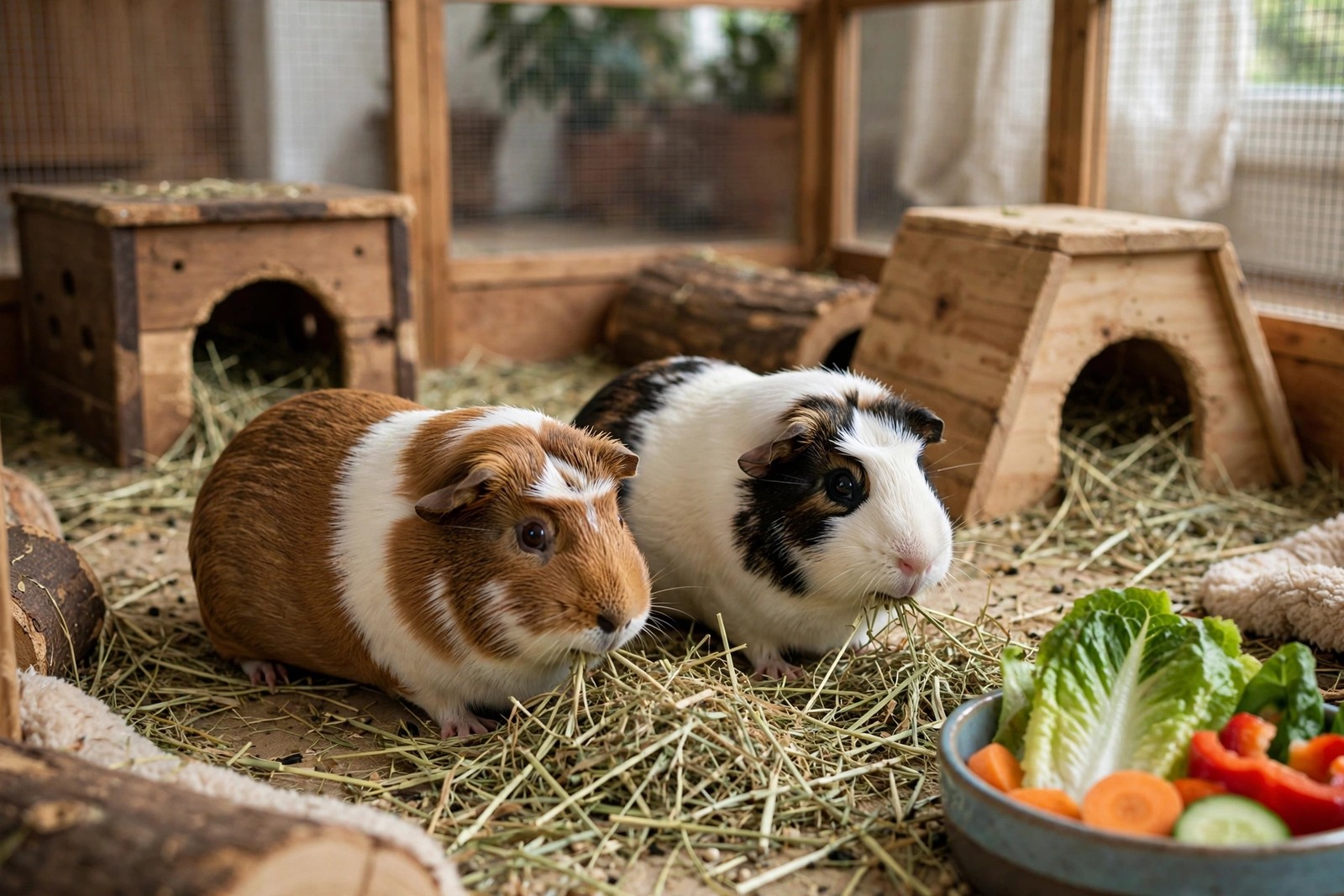
A single guinea pig can survive alone, and many do, but survival is not the standard a good owner should aim at. In the wild these are prey herd animals who sleep, graze, and take their sense of safety from the group around them. A lone pig has nobody to wheek back, nobody to follow to the food bowl, and nobody whose calm tells it the room is safe. Human company helps, and handling matters, but you cannot sit beside the enclosure for the sixteen hours a day your pig is awake and active in bursts, and you do not speak guinea pig.
What Loneliness Actually Looks Like
Owners often describe a lone pig as easy or quiet. Frequently that quiet is the problem. A lonely guinea pig may stop popcorning and exploring, sit hunched in one corner, eat less enthusiastically, call repeatedly when anyone leaves the room, or become unusually jumpy at sounds it once ignored. Some become clingy during handling and frantic when put back. These signs overlap with illness, so a vet check is sensible for any pig that changes, but when a healthy pig brightens within days of gaining a companion, the diagnosis was company. In a few places, including Switzerland, keeping guinea pigs singly is actually prohibited by animal welfare law, which reflects how settled this point is among vets and rescues.
Choosing a Companion That Will Work
Two sows are usually the easiest pairing. Two boars can live happily together if they are bonded young, given generous space, and provided with two of everything so neither has to compete. A neutered boar with one or more sows is often the most stable combination of all. Unneutered mixed pairs are not an option unless you intend to breed, which brings pregnancy risks that are significant for sows. Rescues frequently offer bonding help and will let a widowed pig meet candidates, which is far safer than buying a baby on impulse and hoping for the best. Age is flexible: an older pig often accepts a younger companion well, and the younger animal can lift the older one's activity and appetite.
Bonding and Housing a Pair
Introduce pigs on neutral ground with hay piles, tunnels with two exits, and space to retreat, and watch for relaxed eating side by side rather than chattering, lunging, or mounting that does not settle. Some rumbling and chasing during the first hours is normal negotiation; drawn blood is not, and means separate and seek rescue advice. A pair needs a noticeably bigger enclosure than the minimum sold for one, with room to move apart, plus duplicate bowls, bottles, and hides. Floor time together each day, unlimited hay, daily vitamin C through diet, and gentle handling for both pigs complete the picture. Expect the pair to cost little more than one pig in hay and vegetables, with the real increase being space and a second vet patient when illness comes.
If Your Pig Is Alone Right Now
Bereavement is the commonest reason a pig ends up single, and an elderly or unwell pig should not be rushed into a stressful bonding. Give extra floor time, hand-feed favourite vegetables, keep the enclosure in a lived-in room, and start the companion search promptly rather than months later, because pigs grieve and decline quickly. Splitting unlimited-hay top-ups, morning vegetables, water checks, and evening floor time for your pair through KinsLe's Care Teams keeps both animals' shared routine steady, whoever in the family is on duty.