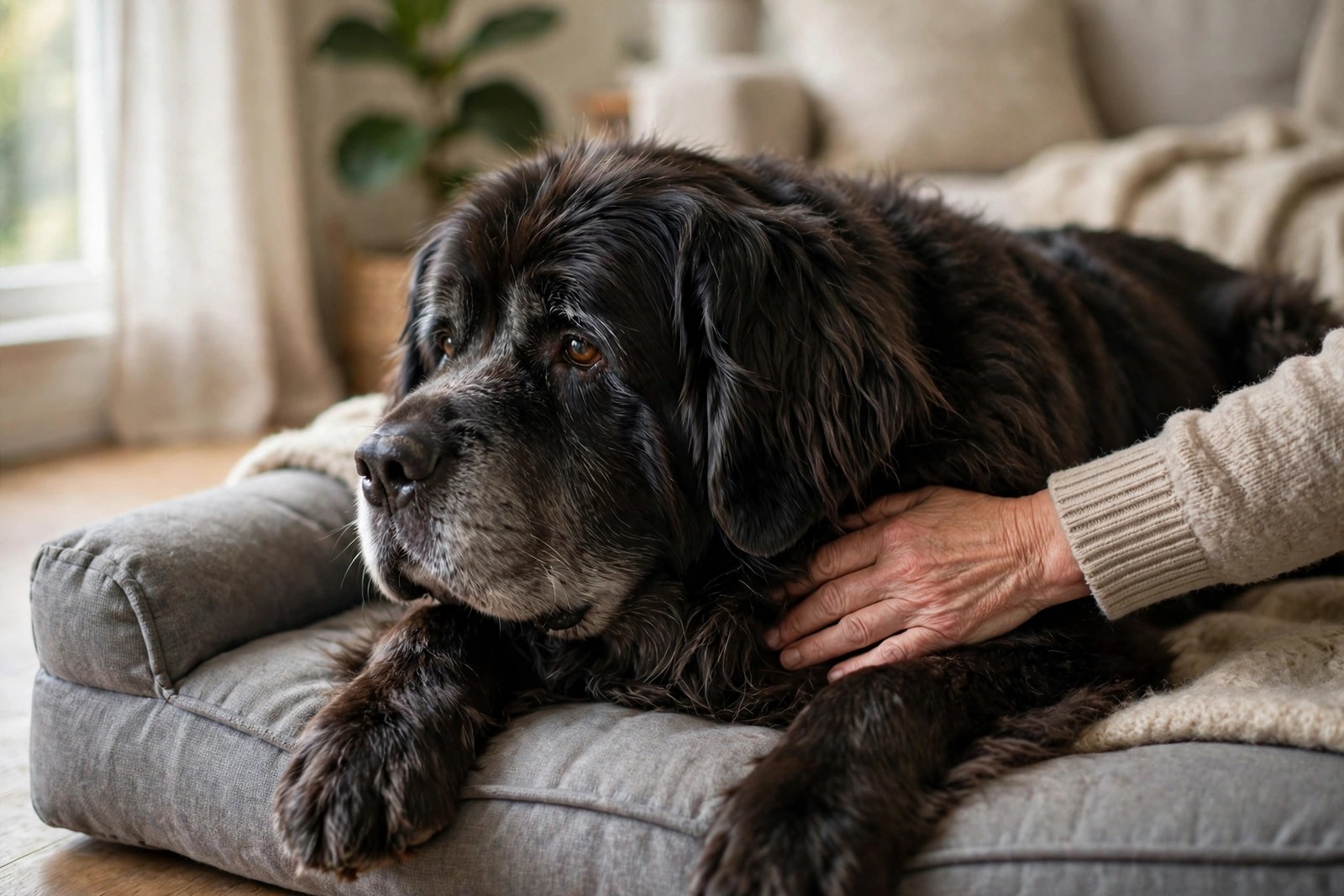
A Newfoundland is a great deal of dog, and its size gives every health question extra weight. Size amplifies everything: a heart condition affects a dog built on this scale, sore joints carry a giant body at every step, anaesthetics and medicines are scaled to that body, and small weight gains are measured in kilos, not grams. Senior care therefore starts with heart screening, runs through joints and weight, and is held together by twice-yearly senior vet visits. This is general information about what to watch and raise; your veterinarian, who can examine and test your dog, decides what your Newfoundland needs.
Heart Screening: The First Conversation
Heart conditions, including valve disease, heart-muscle disease and a narrowing at the aorta that the breed is known for, are why cardiac awareness leads this list. Your vet listens to the heart at every visit, and in a senior dog may suggest further assessment; your job at home is reporting change early. The signs to phone about are a new or changing cough, tiring noticeably sooner on a familiar walk, breathing faster than usual when resting or asleep, reduced interest in exercise, and any fainting or collapse episode, which always warrants a prompt call. Do not restrict exercise drastically on suspicion alone or start any heart-related product you have read about; do write down when the sign happened, what your dog was doing, and how long it lasted, because that account is genuinely useful to a vet assessing a heart that may sound unremarkable in a quiet consulting room.
Joints Carrying a Giant Frame
Hips, elbows and knees — including the cruciate ligaments in the knees — take enormous loads in this breed, and arthritis changes a Newfoundland's life through logistics as much as pain: getting into the car, rising from a slippery floor, managing steps. Watch rising after rest, listen for scrabbling on hard floors, note any hind-leg skipping or sudden lameness, which needs a vet visit rather than rest and hope, and put down runners or mats on the routes your dog uses. Ramps for the car and a supportive bed in a draught-free spot are practical comforts, not indulgences. Keep exercise daily, short and steady; a giant senior maintains muscle, and muscle is what protects joints, far better with regular gentle walks than with occasional long outings.
Weight: The Quiet Multiplier
Extra weight adds to the heart's workload, loads every sore joint, and raises the stakes of any anaesthetic, so the weight check at each six-monthly visit matters and the ribs test at home matters weekly: you should be able to feel ribs under a modest fat covering without digging for them. Measure food rather than pouring it, be honest about the treats and the finishing of other pets' bowls, and remember that the real problem is the extras across the whole day, which only a written feeding routine exposes. If weight is creeping, discuss a reduction plan with your vet rather than cutting meals sharply on your own, because a giant dog still needs full nutrition while calories come down.
The Deep Chest, Coat and Skin
Like other deep-chested giants, Newfoundlands deserve bloat awareness: restlessness, drooling, retching that produces nothing and a tight, swelling belly after eating are an emergency requiring the vet immediately, and feeding two smaller meals a day with a calm hour after eating is a sensible pattern to agree with your vet. The heavy double coat also needs a weekly parting down to the skin, especially behind the ears, under the collar and in the feathering, where moisture and mats can hide sore patches; dry your dog properly after wet walks and swimming, because a coat this dense dries slowly and the skin underneath suffers quietly. KinsLe's Pet Passport keeps your Newfoundland's heart findings, six-monthly weights, joint notes and coat findings together in one portable record, so the specialists and emergency vets who may meet your dog see the full history at once.